


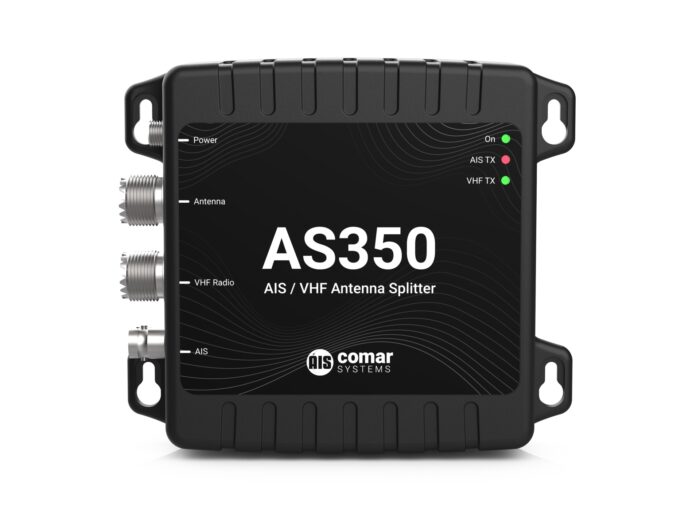
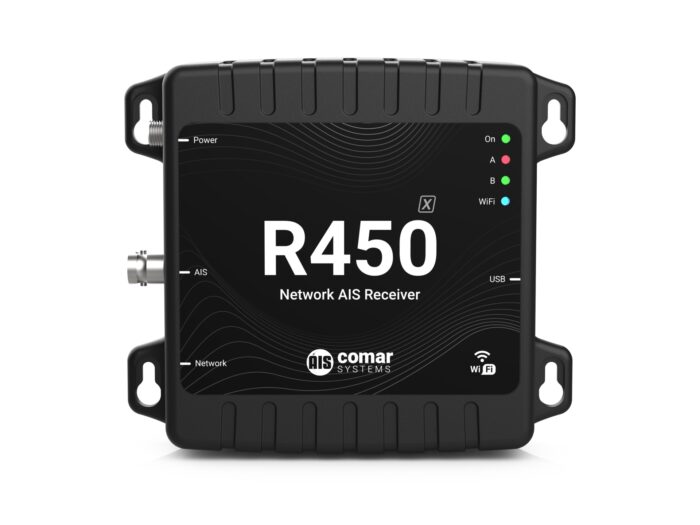
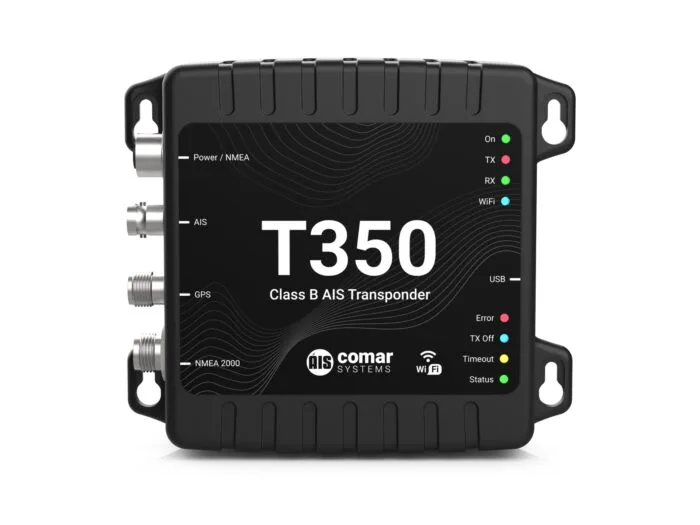
We’re a trusted and reliable supplier of AIS Automatic Identification Systems
Comar Systems is the largest supplier of land-based AIS receivers for global asset tracking and have over 40 years of design and engineering knowledge in the maritime industry. Specialising in AIS Transponders, Transmitters, Receivers, Splitters & Antenna for marine traffic and intelligence information providers.
COM100 COMPACT RECEIVER
Lightweight AIS for UAVs & Drones
The Comar COM100 OEM AIS Receiver is a dual channel parallel synthesised AIS receiver and is ideal for deployment in remote situations, where space, weight and reliability are critical factors. Applications may include unmanned UAV drones for sea skimming, coastal monitoring, ship surveying, surveillance and drone warfare. The applications are endless.
What is AIS?
AIS (Automatic Identification System) is the mariner’s most significant development in navigation safety since the introduction of radar. The system was originally developed as a collision avoidance tool to enable commercial vessels to ‘see’ each other more clearly in all conditions and improve the helmsman’s information about his surrounding environment. AIS does this by continuously transmitting a vessels identity, position, speed and course along with other relevant information to all other AIS equipped vessels within range. Combined with a shore station, this system also offers port authorities and maritime safety bodies the ability to manage maritime traffic and reduce the hazards of marine navigation.
Due to the great safety benefits offered by AIS, this technology was made compulsory throughout the world in 2002 for all passenger ferries and vessels over 300 gross tonnes.

How does AIS work?
The Automatic Identification System was developed to allow ships and coastal stations to accurately locate and identify one another. An AIS transceiver uses VHF radio and GPS technology to communicate with other nearby ships.
An AIS transponder determines its own position, speed and course using a built in GPS receiver. This
information is combined with other important navigation information and automatically communicated between AIS equipped vessels without any user interaction.
AIS transponders on other vessels and coast stations receive this information and use it to build up a live graphical display of traffic in the area. The transponder can be connected to many types of chart plotter or PC charting software to give a RADAR type display of vessel positions. AIS does not require a radar, but can offer similar capabilities and even enhance a radar image if a radar has already been fitted to the vessel. The range or coverage of the system is similar to a VHF radios. The system also has the advantage that VHF radio signals will travel around bends and over islands giving better coverage than RADAR or enhancing a RADAR picture when used together.

Surface with an approach centered on understanding customer needs and providing tailored solutions, Sunair serves the world’s leading land forces, joint forces, governments, international organizations, and commercial institutions for their respective strategic surface communications requirements. Sunair provides complete ground-to-ground communications packages in fixed station, sheltered, transportable, and vehicular settings.
What are the differences between AIS classes?
Two types of AIS transponder classes are available:
Class A transponders
Class A transponders are only required on ships in excess of 300 gross tons on international voyages and are designed for large ships and vessels. More information is transmitted and received in comparison to a Class B transponder.
Best suited for:
- Commercial Shipping Vessels
- Cruseliners
- Defence Vessels
- Workboats
Class B transponders
Class B AIS transponders can be fitted to any non-SOLAS vessel. They have been developed to provide the safety and navigation benefits of AIS to smaller vessels with lower cost and simpler installation compared to Class A.
Best suited for:
- Smaller Vessels
- Leisure Craft
- Yachts
- Speedboats
AIS Features Comparison
| AIS FEATURES AT A GLANCE | CLASS A | CLASS B | RECEIVER ONLY |
|---|---|---|---|
| Transmit own position and vessel data | |||
| Receive position from Class A vessels | |||
| Receive position from Class B vessels | |||
| Receive name & call signal from Class A vessels | |||
| Receive name & call signal from Class B vessels | * | * | |
| Includes certified GPS receiver | |||
| Transmit “Safety related message” | |||
| Meets international AIS standards | |||
| Can be fitted to SOLAS vessels | |||
| Can be fitted to non-SOLAS vessels | |||
| Two parallel receivers for complete AIS reception | ** | ||
| DSC receiver for automatic international channel control |
* Some Class A transponders and receive only devices may require a software update to receive the latest Class B vessel details messages.
** All Comar AIS receiver products have 2 parallel channels and can receive messages on both channels simultaneously.
Information about AIS receivers
Receivers will pick up broadcasts from both Class A and Class B AIS transponders but do not transmit their own position. The receiver only allows you to see the position of other vessels, and your position will not be visible to others.