


COAXIAL & RF PROTECTION FOR HF TRANSMITTERS, HF TRANSCEIVERS & VHF TRANSMITTERS
RF Equipment Protection High Power
Novaris high power surge protectors suit applications including MF, HF and VHF transmitters to 50kW. The spark gap arrester has an optical arc sensor which may be used to momentarily interrupt the transmitter.
Novaris is well known for developing surge protection solutions for specific customer applications around the world. To achieve this we rely on a solid understanding of the environment and requirements for each project. This feeds from our consultative approach to surge protection.
A recent example of this was a custom solution developed for a telecoms company in Sri Lanka. The remote mobile sites were exposed to a large amount of surge activity combined with grid instability.
Some of the key factors that were taken into consideration were:
– Providing a multilayered protection approach for redundancy and performance
– Ensure minimal residual voltage during a surge event
– Allowing for temporary overvoltages (TOV) without surge protection failure
– Protect against line to earth failures
– Provide all of the above without having to resort to a large scale site filter

- Maximum discharge current (8/20µs): 100kA
- Power rating: >50kW limited only by coaxial cable
- Surge element: Spark gap, gap setting: 2mm / 10kW
- Arc sensor: Optical detector utilising photodiode, feeding transmitter interface to provide momentary shutdown
- Transmission medium: Arc detector fed to transmitter via optic fibre. Alternate metallic cable available.
STANDARDS COMPLIANCE
- ITU-T K.44
- AS/NZS 1768
- IEEE C62.41
- IEC 61643-21
- UL497B
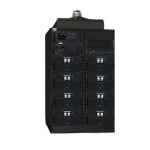
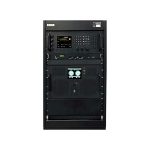
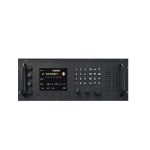

HF (high-frequency) surge arresters:
HF (high-frequency) surge arresters are specialized surge protective devices (SPDs) designed to protect sensitive electronic equipment, particularly in telecommunication and radio frequency (RF) systems, from damaging voltage spikes. These arresters are typically installed in-line on coaxial cables and use components like gas discharge tubes (GDTs) to divert excess energy to the ground, while maintaining the integrity of the high-frequency signal.
- Coaxial Construction: HF surge arresters generally feature a coaxial design to ensure excellent RF characteristics, wide bandwidth, low insertion loss, and minimal Voltage Standing Wave Ratio (VSWR).
- Protection Mechanism: The primary protection component is often a built-in gas discharge tube (GDT), which acts as a high-speed switch. Under normal voltage, it is non-conductive, but during a surge, the gas arcs over, creating a low-impedance path to ground.
- Wavelength Technology: Some professional-grade arresters, like those in the PRC series by PolyPhaser, use a “Quarter wave” technology, which provides very low residual voltage and is maintenance-free.
- Repeatable Operation: Most modern HF surge arresters, especially those with GDTs, can repeat the surge discharge and recovery action many times without needing replacement of the entire unit. If the GDT element itself is damaged, it can often be replaced.
- Grounding is Crucial: For any surge arrester to be effective, it must have a good earth connection. Without proper grounding, even the most sophisticated protection will be ineffective.
- Location: Install the surge arrester as close as possible to where the cable enters the building, to prevent surges from entering the main structure.
- Signal Loss: Be aware that any in-line device can introduce some signal loss. Reputable brands like Alpha Delta are designed to minimize this, but it is a factor to consider for very weak signal environments.